
Spiders have eight legs, silk strong enough to rival steel, and a reputation that makes grown adults flinch. You might have read 1,000 facts about spiders and still feel your pulse spike the moment one drops from the ceiling. That’s not irrational — that’s biology doing its job.
The Goliath Birdeater tips the scales at 170 grams and spreads its legs wider than a dinner plate. The Sydney funnel-web can kill an unprotected adult in under an hour. When researchers talk about the most scary spider in the world, they’re not splitting hairs over aesthetics — venom potency, aggression, and sheer size all factor in. If you live in Sydney or anywhere near the Amazon rainforest, checking your shoes before you put them on isn’t a horror-movie trope. It’s a morning habit. Below, we rank the 10 scariest spiders on the planet — starting with the ones that genuinely earn the title.
Brazilian Wandering Spiders
The Brazilian wandering spider — widely known as the “banana spider” — ranks among the most scary spiders in the world. It earns that reputation through a combination of highly potent venom and an unsettling habit of wandering into homes, tucking itself inside shoes, folded clothing, or damp towels.
Native to Central and South America, this species is consistently listed among the 15 most dangerous spiders in the world. Its venom can trigger rapid paralysis, and a bite delivers pain that is, by all accounts, excruciating. What makes it especially alarming is its resilience — survivors of severe envenomation sometimes describe the spider’s almost relentless vitality, earning it a reputation as something of a zombie spider: it seems almost impossible to deter once it has set its mind on a hiding spot.
Unlike most web-building species, the Brazilian wandering spider hunts on foot. After dark, it roams the forest floor in search of insects, small lizards, frogs, and even other spiders. Its reflexes are fast enough to snatch prey mid-air — one of the more astonishing facts about spiders in this genus. That aggressive hunting style, combined with scariest-looking spiders aesthetics — long, hair-covered legs and bold defensive posture — makes it a genuinely sobering sight.
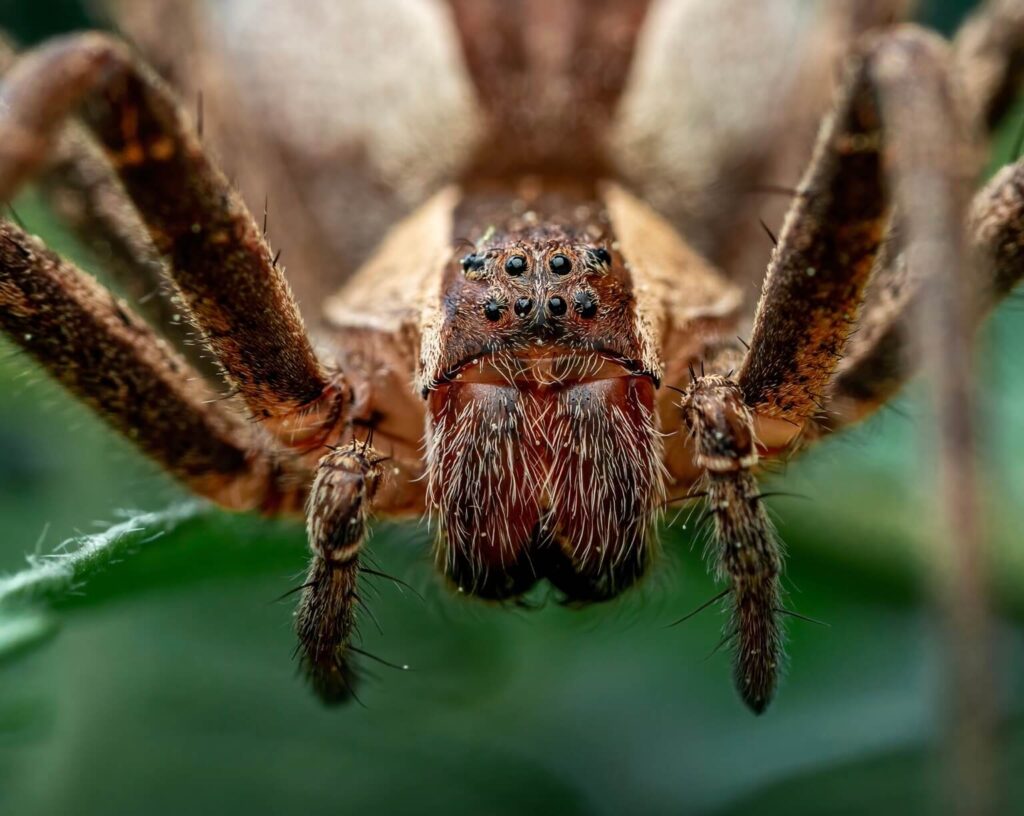
Despite the fearsome profile, the Brazilian wandering spider rarely bites without provocation. Still, when it does, the consequences can escalate quickly. Symptoms include intense local pain, swelling, muscle spasms, elevated heart rate, and — in serious cases — systemic paralysis.
2026 first-aid protocol if bitten: wash the bite area thoroughly with soap and water, apply a cold compress to reduce swelling, keep the affected limb still and below heart level, and seek emergency medical care immediately if you notice facial swelling, difficulty breathing, or spreading numbness. Do not apply a tourniquet or attempt to suck out the venom.
One practical tip worth remembering: if you find a Brazilian wandering spider in a bunch of bananas — which happens more often than people expect, since these spiders hitchhike in fruit shipments — don’t swat at it or reach for it. Step back calmly, give it space, and contact pest control. Sudden movements are exactly what triggers a defensive bite.
To reduce the risk at home, shake out shoes, clothing, and bedding every morning — especially if you live in or are travelling through areas where this spider is common. Check behind stored items and inside boxes left on the floor. Awareness and simple habits go a long way toward avoiding an encounter with one of the most genuinely dangerous arachnids on the planet.
Sydney funnel-web spider
When people debate the most scary spider in the world, one name keeps coming up: the Sydney funnel-web spider. Found throughout Greater Sydney, Australia, this arachnid has earned its reputation as one of the 15 most dangerous spiders in the world — and for very good reason. Males, in particular, produce a venom so potent that it can kill an adult human in a matter of hours without treatment.
The Sydney funnel-web belongs to the genus Atrax and ranks consistently among the scariest looking spiders on the planet. It is large, glossy black, and builds the distinctive funnel-shaped silk retreat that gives it its name. When prey — or an unlucky hand — disturbs the trip-lines at the entrance, the spider strikes fast and hard. Its oversized fangs can punch straight through a fingernail, and the venom it delivers causes a cascade of symptoms: intense pain, profuse sweating, muscle spasms, and, if left untreated, cardiovascular collapse.
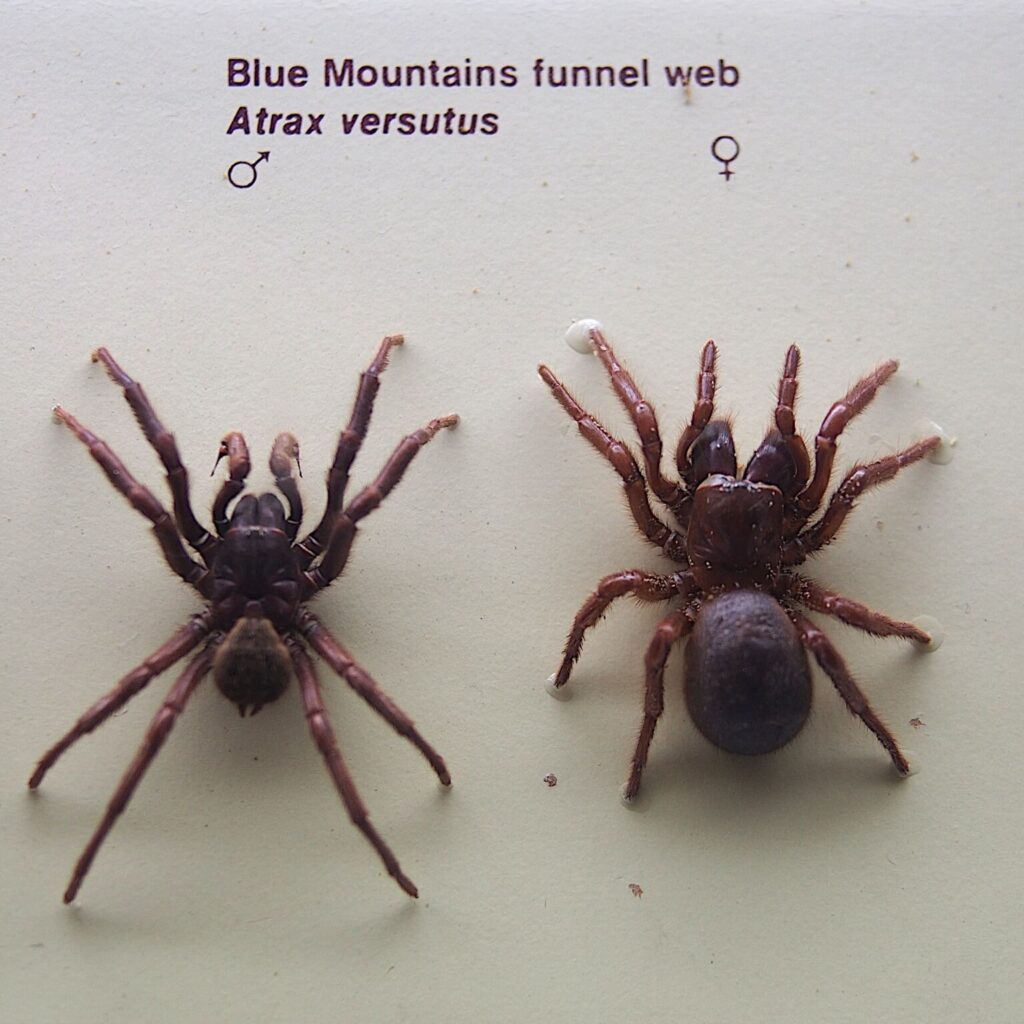
What makes this species especially unnerving is where it chooses to live. Forget remote bushland — Sydney funnel-webs turn up in suburban gardens, under rocks, inside shoes left on the porch, and occasionally in backyard swimming pools, where males can survive for up to 30 hours. Australians have a dry way of putting it: if you haven’t found a funnel-web in your garden yet, you probably just haven’t looked hard enough. The spiders are most active in summer, when mature males wander in search of mates and accidentally wander into homes.
Records of the species stretch back well over a century — the first formally documented specimens date to 1899, when early naturalists were cataloguing the surprisingly lethal wildlife of New South Wales. Since then, taxonomists have identified dozens of related funnel-web species across eastern Australia, but the Sydney funnel-web remains the deadliest of them all, largely because it shares its range with millions of people.
The fangs of the Sydney funnel-web spider deserve special mention. Unlike most spiders, whose chelicerae move sideways in a pinching motion, the funnel-web strikes downward with a stabbing action — which is why it can pierce skin so effectively. If you suspect a bite, immobilise the affected limb with a pressure-immobilisation bandage and get to a hospital immediately. Antivenom has been available since 1980, and not a single death from a funnel-web bite has been recorded in Australia since its introduction — but speed matters enormously.
For all the fear they inspire, Sydney funnel-webs sit alongside other remarkable arachnids in Australia’s ecosystem. The giant huntsman spider, for instance, routinely startles homeowners with its leg span of up to 30 centimetres — though it is harmless to humans. Even so, among the ugliest spiders and the most formidable, the funnel-web occupies a category of its own.
The Sydney funnel-web is dangerous, fascinating, and deeply embedded in the ecology of southeastern Australia. Treat it with serious respect — a wide berth, careful garden hygiene, and shake-out your shoes — but there is no need for panic. Like every predator, it has a role to play. Spot one, step back, call a local pest professional if necessary, and appreciate, from a safe distance, just how extraordinary this spider really is.
Brown recluse spider
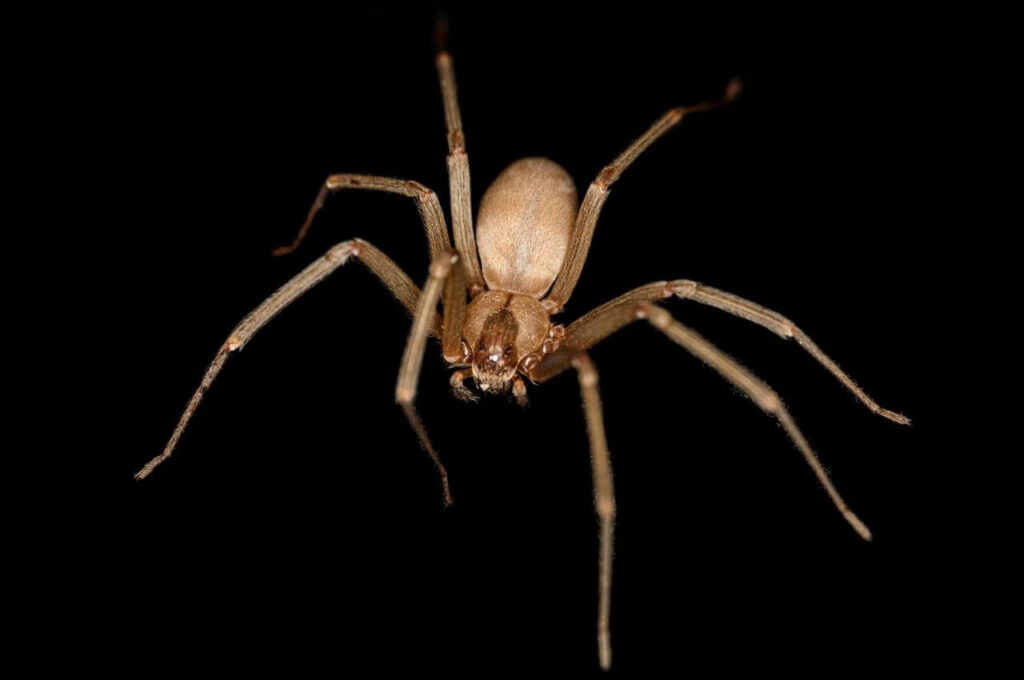
Few spiders earn their reputation as honestly as the brown recluse. Also called the “fiddleback spider” for the violin-shaped marking on its back, this compact predator consistently appears on lists of the scariest looking spiders — and for very good reason. It rarely exceeds an inch in body length, yet its venom is capable of causing necrosis: the tissue around the bite literally begins to break down. Left untreated, that process can spiral into serious systemic complications.
Brown recluse spiders are widespread across the central and southern United States, making them one of the most dangerous spiders people in those regions are likely to encounter. What places them firmly among the most scary spiders in the world isn’t sheer size — it’s the mismatch between how unremarkable they look and how severe the consequences of a bite can be. The spider’s irregular, loosely constructed web offers no visual warning. An insect blunders in, and the recluse strikes fast.
The truly unsettling part? These spiders prefer quiet, undisturbed spaces — cardboard boxes, seldom-opened closets, shoes left by the door. Encounters often happen not in the wild but inside ordinary homes and offices, which is why awareness matters far more than fear.
If you suspect a brown recluse has bitten you, don’t wait for symptoms to worsen. Seek medical attention straight away. Early treatment dramatically reduces the risk of tissue damage and other complications. The spider may be small and reclusive by nature, but it deserves your full respect — and a wide berth.
Goliath Birdeater — the spider that rewrites the rules
If you thought the brown recluse was intimidating, meet the Goliath Birdeater (Theraphosa blondi) — a South American tarantula that holds the title of the world’s heaviest spider and ranks squarely among the ugliest spiders on the planet, depending on your tolerance for sheer biological excess. With a leg span stretching up to 30 cm (roughly the diameter of a dinner plate) and a body the size of a human fist, this is the creature that makes even seasoned arachnologists pause for a second look.
The name is somewhat misleading. The Goliath Birdeater doesn’t routinely hunt birds — it earned its dramatic label from a 19th-century engraving that happened to catch one feeding on a hummingbird. In reality, its diet runs to earthworms, frogs, and the occasional small rodent. But here’s the detail that tends to end conversations: when threatened, it rubs its bristled legs together to produce an audible hissing sound — a behavior called stridulation — that can be heard from several meters away. That’s not a spider warning you. That’s a spider announcing itself.
Its fangs (chelicerae) are up to 3.8 cm long and robust enough to break human skin with ease, delivering a bite that, while not medically dangerous to most healthy adults, is described as deeply unpleasant. The urticating hairs it can flick from its abdomen are arguably the bigger concern — they cause intense irritation on skin and in eyes, and the spider deploys them liberally when cornered.
For anyone compiling 1,000 facts about spiders or simply trying to understand what makes an arachnid genuinely formidable, the Goliath Birdeater is the case study that keeps on giving. It moves quietly for something so large, it lives in burrows in the rainforests of Venezuela, Brazil, Guyana, and Suriname, and it can live up to 25 years in captivity. Size, sound, reach, and longevity — the Goliath stacks the deck in every direction.
Black widow spider
When it comes to the most scary spider in the world, the black widow consistently tops the list. This venomous spider is instantly recognizable by its glossy black body and the vivid red hourglass marking on its abdomen — a warning sign that nature designed for a reason.
What makes the black widow one of the scariest looking spiders on the planet isn’t just its appearance. Its venom is roughly 15 times more toxic than that of a rattlesnake, making it one of the most potent biological weapons in the arachnid world. A bite can trigger intense muscle pain, severe cramps, and in serious cases, paralysis — symptoms that demand emergency medical attention without delay.
The black widow belongs to the widow spider family, which also includes the brown widow. Both are venomous, but the black widow’s toxicity places it in a category of its own. If you enjoy browsing 10 amazing facts about spiders, here’s one worth remembering: despite its fearsome reputation, the black widow rarely bites unless threatened — yet when it does, the consequences can be life-altering.
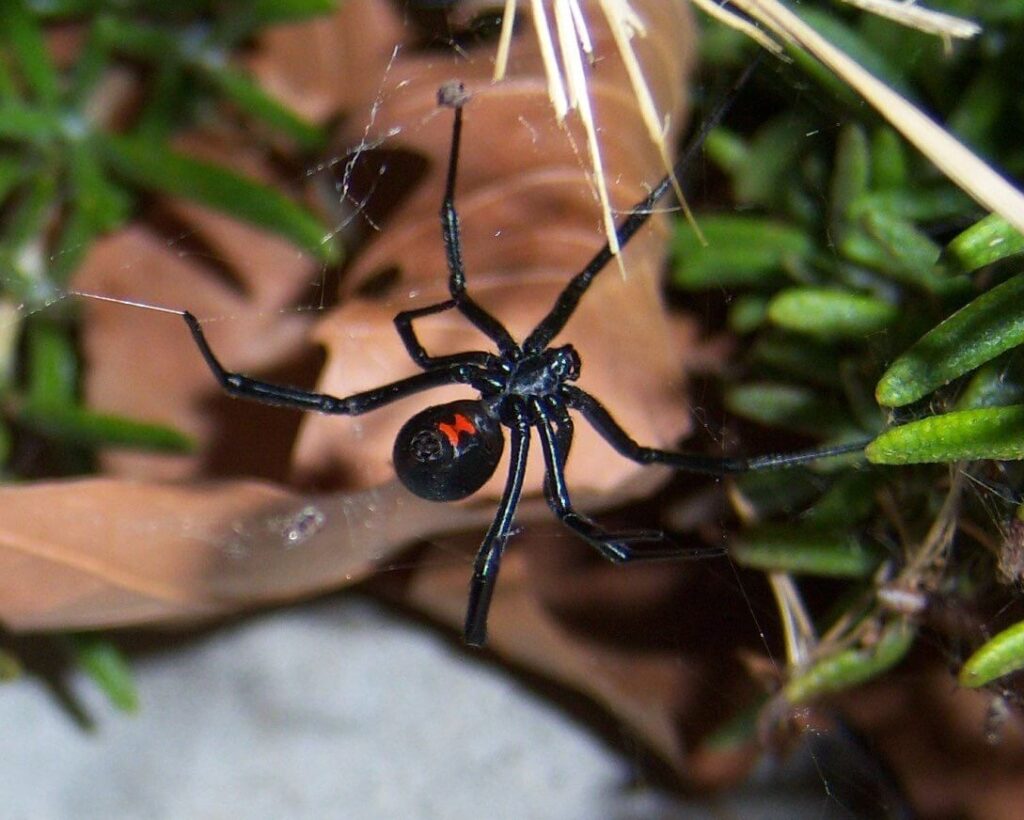
One of the most unsettling aspects of black widow spiders is how close they live to people. Garages, sheds, woodpiles, and even the dark corners of a basement are all perfectly acceptable real estate for this spider. That proximity is precisely what earns them a spot on any list of the 15 most dangerous spiders in the world — contact can happen before you even notice the web.
In 2026, there’s an added layer of confusion worth addressing: across parts of the United States, people are increasingly misidentifying black widows as Joro spiders, which have been spreading rapidly through the Southeast. The two couldn’t be more different in terms of danger. While the Joro is essentially harmless and its ornate coloring draws comparisons to the decorative 4-spined jewel spider, the black widow is anything but ornamental. Mistaking one for the other is a mistake you don’t want to make.
If you’re ever bitten by a black widow, don’t wait to see how symptoms develop. The venom acts quickly, and early treatment significantly improves outcomes. Call emergency services or get to a hospital as soon as possible.
In conclusion, the black widow spider earns its reputation as one of the most dangerous and scariest looking spiders on earth. Its extraordinarily potent venom, combined with its habit of nesting in human spaces, makes every encounter a serious matter. If you live in an area where black widows are common, take sensible precautions — check your shoes, shake out gardening gloves, and never reach blindly into dark spaces. Respect goes a long way with this one.
Wolf Spider
When it comes to scary spiders, the wolf spider is definitely a contender. These spiders are part of a group known as the Lycosidae family, known for their large size and formidable appearance.
Despite their fearsome appearance, wolf spiders are not considered one of the deadliest spiders. Their venom is relatively mild and not generally considered dangerous to humans. However, their size and speed make them intimidating.
One of the scariest things about wolf spiders is their hunting technique. These spiders are active hunters and use their speed and agility to chase down their prey. They are also known for their impressive jumping ability, which allows them to leap onto their prey and deliver a quick and deadly bite.
Wolf spiders are found all over the world, and they come in a variety of different sizes and colours. Some species can be quite large, with a leg span of several inches, while others are much smaller.
Despite their intimidating appearance, wolf spiders are generally not aggressive towards humans. They will only bite if they feel threatened or cornered, so it’s important to avoid provoking them.
In conclusion, while the wolf spider may not be the deadliest, its size and hunting technique can still make it a bit scary. If you ever come across one of these spiders, it’s best to give it plenty of space and avoid provoking it. And remember, while some spiders can be intimidating, they play an important role in our ecosystem and are generally harmless to humans. So the next time you see a wolf spider, try to appreciate its unique beauty and give it the space it deserves.
Mouse spider
When it comes to the scariest looking spiders on the planet, the mouse spider deserves a spot near the top of the list. Stocky, heavy-bodied, and equipped with a glossy red or jet-black head, it looks every bit as formidable as its reputation suggests.
Mouse spiders belong to the genus Missulena and are found across most of Australia, from suburban gardens to dry inland scrub. There are around a dozen recognised species, varying in size from roughly half a centimetre to nearly three centimetres in body length.
At first glance, a mouse spider is easy to mistake for a funnel-web — and that confusion is understandable. Both share a similar heavy build, prominent fangs, and a glossy carapace. The key difference is temperament: while the Sydney funnel-web is notoriously aggressive, the mouse spider tends to be less confrontational and often delivers a dry bite when disturbed. That said, its venom is chemically similar to funnel-web venom and should never be underestimated.
Here is where things get genuinely reassuring: funnel-web antivenom works against mouse spider venom just as effectively. Medical teams have used it successfully in serious envenomation cases, which means that in 2026, with prompt first aid and hospital treatment, survival rates are close to 100%. The catch, of course, is acting quickly — apply a pressure immobilisation bandage, keep still, and get to an emergency department without delay.
Mouse spiders are burrowing hunters. They dig deep, silk-lined tunnels with trapdoor-style entrances and wait for prey to wander past. Males leave their burrows during autumn and winter to search for females, which is when most human encounters happen. If you come across one, give it room — it will almost always retreat rather than charge.
Respecting the mouse spider means understanding it. It is a capable, venomous predator that plays a genuine role in controlling insect populations. Treat it with the same caution you would any potentially dangerous animal, and your chances of a safe outcome are extremely high.
Redback spider
The redback spider is a notorious spider that is found in Australia. This spider is widely considered one of the scariest spiders out there, thanks to its nasty bite and intimidating appearance.
Redback spiders are part of the Latrodectus genus, which includes the black widow spider found in the United States. Like their North American cousins, redback spiders have a distinctive red mark on their abdomen, which can be quite alarming.
The venom of the redback spider is highly toxic. It can cause various symptoms, including severe pain, muscle weakness, and even paralysis. While bites from this spider are rarely fatal, they can be extremely painful and cause significant discomfort.
One of the scariest things about redback spiders is their prevalence in Australia. These spiders are found all over the country and are commonly encountered in homes and other buildings. This means that if you’re living or travelling in Australia, you’ll likely come across a redback spider at some point.
Another scary thing about redback spiders is their aggressive behaviour. These spiders are known to be territorial and attack anything that comes close to their web or nest. If you accidentally disturb a redback spider, you could be in for a painful and dangerous encounter.
If you ever come across a redback spider, staying calm and giving the spider plenty of space is important. These spiders are generally not aggressive towards humans and will only bite if they feel threatened. It’s also important to seek medical attention if you are bitten, as the venom can cause serious health problems if left untreated.
In conclusion, the redback spider is one of the scariest spiders. Its venomous bite, intimidating appearance, and aggressive behaviour make it a formidable predator and one that should be respected and avoided if possible. If you’re living or travelling in Australia, take precautions and stay safe around redback spiders.
Giant Huntsman spider
The Giant Huntsman spider earns its place among the scariest looking spiders on the planet — and once you see one in person, you’ll understand exactly why. With a leg span reaching up to 30 cm, this is the largest spider in the world by sheer spread, and it moves with a speed that genuinely defies belief.
It won’t kill you with venom. That’s the twist. But when a creature the size of a dinner plate sprints across the wall at full tilt — and it will sprint — your heart will have its own opinion on the matter. Among the 10 amazing facts about spiders that tend to leave people speechless, the raw velocity of the Giant Huntsman consistently tops the list. It doesn’t stalk. It doesn’t creep. It bolts.
Native to the caves and dense forests of Laos, this spider was only formally described in 2001, which means for most of human history it was lurking undocumented in the dark. It favors rocky crevices and cave entrances — places where its flattened body lets it slip through gaps that look far too narrow for anything that size. You don’t find the Giant Huntsman. The Giant Huntsman finds you.
Its venom is medically insignificant to healthy adults. A bite may cause localized pain and swelling, but it’s not in the same league as the most dangerous spiders in the world when it comes to toxicity. The real threat is psychological. Researchers who study cave fauna report that even experienced entomologists pause when one of these animals appears unexpectedly at close range. Pause is a polite word for it.
What places the Giant Huntsman firmly in the conversation about the most scary spider in the world isn’t a single dramatic feature — it’s the combination. The scale. The speed. The silence. It hunts without a web, ambushing prey by feel and vibration, which means there’s no tell-tale silk to warn you it’s nearby. One moment the wall is empty. The next, it isn’t.
If the Giant Huntsman ranks as one of the ugliest spiders to some observers, that judgment says more about our instincts than about the animal. It is, by any objective measure, an extraordinary piece of evolutionary engineering — and one of the most compelling reasons the spider world continues to fascinate and unsettle in equal measure.
Six-eyed sand spider
If you ask any arachnologist to name the most scary spider in the world, the six-eyed sand spider will almost certainly come up within the first few seconds. Having encountered these animals in the Namibian desert firsthand, I can tell you — no photograph does justice to how unsettling they are up close. Potent venom, explosive speed, and zero hesitation: this is a predator that has been perfecting its craft for millions of years.
The six-eyed sand spider belongs to the genus Sicarius and is native to the sandy desert regions of southern Africa. Its relatives are scattered across other arid parts of the world, but the African species are considered the most dangerous members of the group by a considerable margin.
The venom is what makes this spider genuinely alarming. It contains a rare blend of hemotoxic and cytotoxic compounds that attack both blood and tissue simultaneously. If this creature bites you out in the desert, do not wait for an antidote — it does not exist. As of today, no antivenom has been developed, and there is no breakthrough in sight for 2025 or 2026. Tissue simply begins to die: necrosis sets in, blood vessels rupture, and the damage spreads. Cases involving a confirmed bite have ended in limb loss and, in some documented instances, death.
Beyond the venom, the hunting strategy of the six-eyed sand spider is what makes it so difficult to avoid. It buries itself just beneath the surface of the sand, leaving only a faint outline, and waits motionlessly for prey to wander within striking range. Its movement, when triggered, is shockingly fast. You will not see it coming. This ambush technique, combined with a body that blends almost perfectly with desert substrate, makes it one of the scariest-looking spiders precisely because you rarely see it at all until it is far too late.
A practical note for anyone planning a safari through Namibia or the wider Kalahari region: do not cut corners on footwear. Closed, sturdy boots are non-negotiable. Every single morning — and again after any rest stop — shake your boots out thoroughly before putting them on. Six-eyed sand spiders are perfectly sized to shelter inside a boot overnight, and they will not announce their presence. This is not alarmism; it is the standard advice that experienced desert guides give without exception.
If a bite does occur, get to a medical facility as fast as physically possible. There is no antivenom to administer, so treatment is entirely supportive — managing tissue damage, preventing infection, and stabilising circulation. Time is the only variable you can control, so do not waste any of it.
Respect for this spider is not optional. Give it space, watch where you step, and treat every patch of open desert sand as potentially occupied. The six-eyed sand spider does not chase people — but it absolutely does not retreat either.
Goliath birdeater tarantula
When people search for the most scary spider in the world, the Goliath birdeater tarantula almost always tops the list — and honestly, it earns that reputation. Few creatures on the planet trigger the same primal reaction as this enormous, hairy predator lurking in the rainforests of South America.
The leg span alone tells the story: up to 12 inches across, making this one of the scariest looking spiders ever documented. Hold a dinner plate in your mind, then picture eight legs wrapped around it. That’s roughly what you’re dealing with.
Its venom is another reason this species consistently ranks among the most talked-about of the 10 amazing facts about spiders that arachnologists love to share. The bite won’t kill a healthy adult, but the pain, localized swelling, and muscle cramping that follow are nothing to dismiss. On top of that, the spider can flick microscopic barbed hairs from its abdomen — these irritate skin and eyes badly enough to ruin your week.
Then there’s the sound. When threatened, the Goliath birdeater stridulates — rubbing its legs and fangs together to produce an audible hissing rasp. Hearing that in the dark of a jungle night is an experience people don’t forget in a hurry.
Despite what the name implies, birds aren’t really on the menu. The diet runs more to insects, frogs, lizards, and the occasional small rodent or snake. The “birdeater” label stuck after an 18th-century engraving showed one dragging a hummingbird — dramatic, but not exactly a Tuesday dinner for the species.
Whether you’re deep into 1,000 facts about spiders or just stumbled across a photo online, the Goliath birdeater tarantula delivers the same gut-punch of awe and unease every time. If you’re ever in its range — Venezuela, Brazil, Guyana — watch where you step, respect the hiss, and keep a respectful distance. This spider has been perfecting its craft for millions of years and doesn’t need your input.
Sydney funnel-web spider
Ranking firmly among the 15 most dangerous spiders in the world — and sitting at number two on most serious threat assessments heading into 2026 — the Sydney funnel-web spider is the kind of animal that commands immediate respect. If you spot one reared up on its hind legs, fangs raised and glistening with venom, don’t stick around to admire the posture. That threat display is completely genuine.
Male Sydney funnel-webs are the problem. They wander in search of mates, end up in shoes, garden gloves, and backyard pools, and they are aggressive in a way that feels almost personal. Where most spiders retreat when confronted, a male funnel-web will hold its ground and strike repeatedly. Each fang can punch through a fingernail. The venom, atracotoxin, attacks the nervous system fast — in serious cases, symptoms escalate within minutes.
The good news for 2026: antivenom works, and it works well. Since its introduction, no deaths from confirmed funnel-web bites have been recorded in Australia when treatment was reached in time. The catch is that last part — in time. This is not a bite you sleep on or drive to a clinic at your leisure. Apply pressure-immobilization bandaging, keep the victim still, and get to emergency care as fast as possible. Every minute counts in a way that isn’t true for most other spider encounters.
The Sydney funnel-web is a stark reminder that the scariest creatures aren’t always the biggest or the most exotic-looking. This one is dark, stocky, medium-sized, and utterly determined. Respect the funnel-web, know first aid, and if you live in greater Sydney — check your boots before you put them on.