
Vintage, Thrift, and Consignment: What Each Term Means
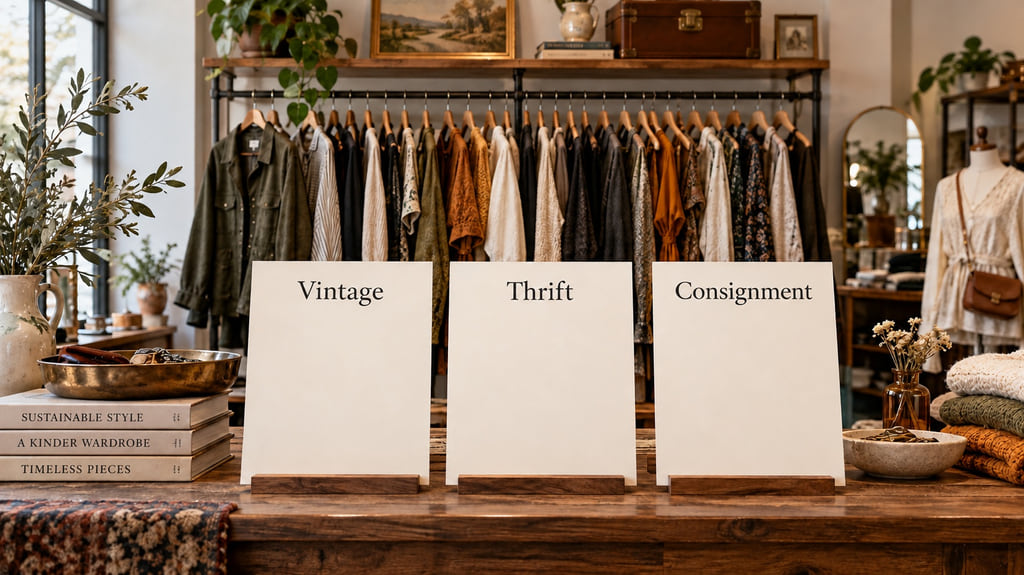
Vintage describes a garment's age or era. Thrift describes secondhand shopping and a type of store. Consignment describes an arrangement for selling someone else's item. A vintage jacket can turn up in a thrift shop or be sold on consignment. Those labels can overlap because they answer different questions.
For U.S. shoppers, the useful comparison is age, source, and selling arrangement—not three mutually exclusive grades of clothing. Retail definitions vary, so a store's name alone cannot establish its inventory, ownership terms, or quality standards. Here is how to read the labels, choose where to browse, and understand an offer when clearing out your closet.
Vintage describes an item; thrift and consignment describe selling models
Start with the garment. Calling it vintage makes a claim about its past, while calling it thrifted tells you how someone found it. Neither tells you whether the shop bought it outright or is selling it for its owner. A recent shirt can be thrifted without being vintage; an older unworn garment can be vintage without having been worn secondhand.
The familiar twenty-year rule needs a name attached. Etsy requires vintage items to be at least 20 years old. That is a marketplace eligibility rule, not a universal law for every resale rack. Etsy also recognizes deadstock as clothing or accessories that have never been worn or sold to the public. Age and previous use are separate questions.
A shop's sign is therefore a starting point. Ask what the seller means by vintage and what supports a garment's date. For thrift and consignment, ask where the clothes come from and how the seller gets paid. You will learn more from those answers than from deciding which label sounds most upscale.
Compare the three terms on separate axes
The table describes common models rather than promises about every business. A store can combine them, and an individual garment can qualify for more than one label. Read across the rows when comparing a specific item or deciding where to take clothes you no longer wear.
| Term | What it describes | How stock arrives | What it cannot establish |
|---|---|---|---|
| Vintage | Age or era of an item | Donation, purchase, consignment, or another source | Condition, authenticity, or a universal minimum age |
| Donation-based thrift | A secondhand retail model | People give items to the organization | That every garment is old or every thrift business is a charity |
| Consignment | A selling arrangement | An owner places an item with a seller under an agreement | A standard commission or automatic authenticity guarantee |
| Buy-sell-trade | An outright purchase or trade model | The shop selects items and offers payment or credit | That every submitted item will be accepted |
Donation-based thrift shop
With this model, donated goods supply the racks. Goodwill Middle Tennessee describes inventory arriving through community donations. That explains this operator's source of stock. Donation and consignment are different transactions: giving a shirt to an organization does not reserve a share of its eventual sale proceeds for the donor.
Ask separately about the organization's mission. The word thrift is not, by itself, proof of nonprofit status. ShopGoodwill's comparison describes thrift and consignment as different retail approaches. Use the actual business's information to establish who operates it rather than assuming every secondhand purchase supports the same cause.
Consignment shop
An owner entrusts an item to a seller instead of receiving an immediate outright purchase payment. The agreement controls the relationship, including payment, markdowns, and what happens if the item does not sell. Treat ownership and responsibility as contract questions; leaving a bag at a counter is not enough to explain either.
A concrete example comes from Crossroads' consignment explanation: payment follows a sale, and the seller completes a consignment contract. That establishes a useful distinction from its immediate cash-and-trade service. It does not make Crossroads' particular arrangement the rule for all stores.
Buy-sell-trade shop
Here, a shop chooses clothes to buy and offers cash or store credit without waiting for another customer to purchase them. Buffalo Exchange describes same-day payment for accepted items and says its selections depend on inventory needs. Acceptance is a buying decision, not a service you can require for every garment.
Cash and store credit serve different goals. If you want money rather than more clothes, compare the cash offer itself. If you plan to shop there, read the credit terms before choosing it. Do not compare a credit balance at one business with cash at another as though they were interchangeable payments.
Vintage item
This label concerns the object rather than the checkout arrangement. A hypothetical jacket from an earlier decade could be donated, bought outright, or placed on consignment. Changing the sales channel would not change when the jacket was made. A newly made retro-style jacket needs a different description even if it resembles an older design.
Ask for the proposed era and the reasons behind it. A label, material, construction detail, or documented collection can contribute to that account. A seller's attractive display does not date the object, and a higher price does not substitute for an explanation. Keep the age claim separate from whether you like the garment.
How consignment differs from selling outright
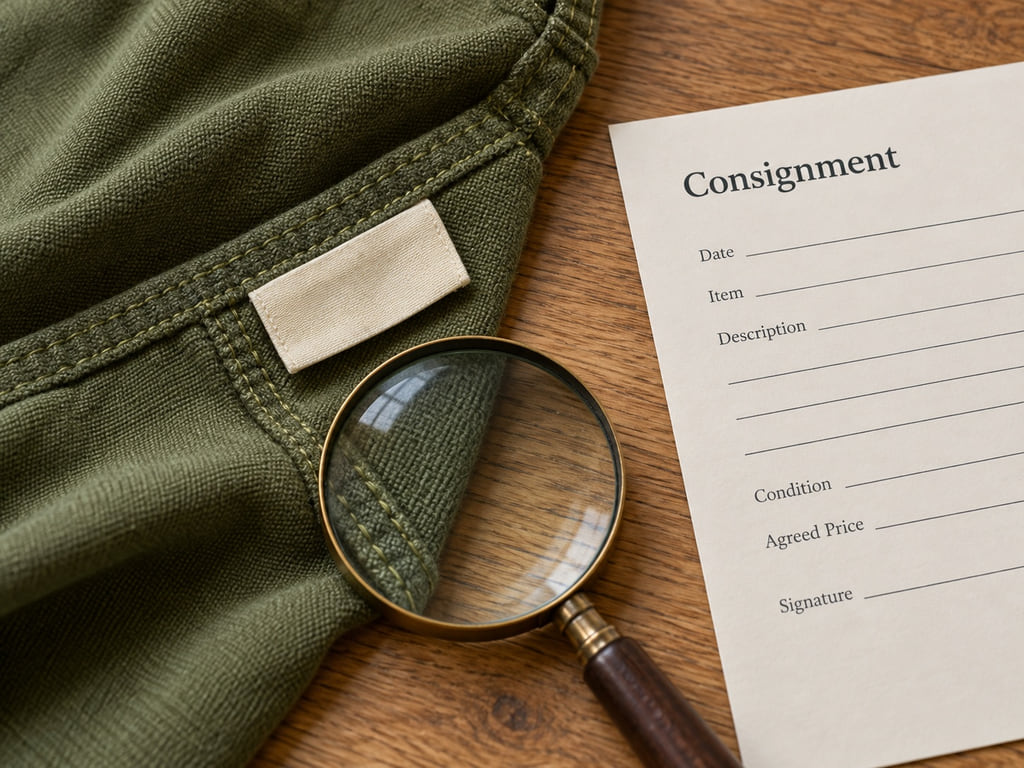
The practical difference is when payment becomes available and what must happen first. With an outright purchase, the shop accepts the item and makes its offer for that transaction. With consignment, the eventual sale matters. Crossroads explicitly distinguishes payment after sale from regular selling in its selling FAQ. A potentially appealing payout does not mean immediate money.
Before consigning, get the terms for your item in writing. Ask who sets the price, whether markdowns need approval, how your share is calculated, and when payment is released. Also establish the selling period, collection deadline, treatment of unsold items, and responsibility for damage or loss. These are questions to resolve, not assumed protections.
Compare the whole arrangement rather than one advertised percentage. A payout percentage refers to the owner's share; a commission describes what the seller retains, and additional charges can change the result. This guide does not assign a standard rate because the particular agreement must supply it. Keep a copy and an item description so you can match the eventual statement to what you left.
Vintage labels do not prove quality or authenticity
Age, condition, and maker are separate claims. An older garment can have damage; a contemporary garment can be well made. Examine the fabric, seams, closures, and disclosed repairs for your intended use. Those practical checks help you evaluate an item, but they do not independently prove a designer attribution or exact production date.
Etsy's vintage policy identifies details such as fabric, brand and care labels, zippers, and buttons as information it may request. It also says that finding a similar listing or buying something at an estate sale cannot verify vintage status. Those limits make a useful point: a story about where a garment was found is not the same as evidence of its age.
For a purchase whose value depends on a particular maker, ask what supports the attribution and what return terms apply. Crossroads says it sometimes requests additional authentication materials or proof of purchase. Do not generalize that practice into a guarantee for every consignment store. If the offered evidence does not answer the claim you are paying for, choose another item.
Use the right store for your shopping goal
For open-ended browsing, a donation-based shop gives you a reason to look across mixed items without assuming a particular era. For a specific period, look for a seller who can explain dating and measurements. For selling clothes, decide whether you want an immediate offer or are willing to wait under a consignment agreement. These are practical matching criteria, not a ranking of store types.
Keep the garment-level checks brief here: fit, condition, usable closures, and care needs still matter whichever label is above the rack. Our guide to finding quality clothing at thrift stores covers that separate inspection task. For the production side of clothing, see facts about where your shirt came from.
Before buying, ask what this item is, what evidence supports its description, and what the store's purchase terms cover. Before selling, ask when you get paid and what happens if it never sells. Those questions work even when a store uses several secondhand labels at once.
Frequently Asked Questions
Can a thrift shop sell vintage clothing?
Yes. A garment's age and the shop's sourcing model are separate. An older item can arrive through donation, just as a recent one can. Check the individual age claim rather than treating thrift as an era. A vintage description also needs support; Etsy's twenty-year threshold applies to Etsy, not automatically to every shop.
Is a consignment commission always the same?
No. Check the agreement for the particular seller and item. Establish your payout, the seller's share, possible fees, markdown rules, and payment timing before leaving anything. Crossroads distinguishes consignment payment after sale from its immediate selling service; its terms are an operator example, not an industry-wide commission schedule.
Sources
Retail definitions: ShopGoodwill and Goodwill Middle Tennessee. Vintage eligibility: Etsy. Payment models: Buffalo Exchange and Crossroads. Operator policies checked October 22, 2026.